
Safety & Practical Advice
Mobility Scooter Safety in Wet Weather
Wet leaves, dropped kerbs and poor visibility — simple habits that keep you safer on grey Hampshire mornings.

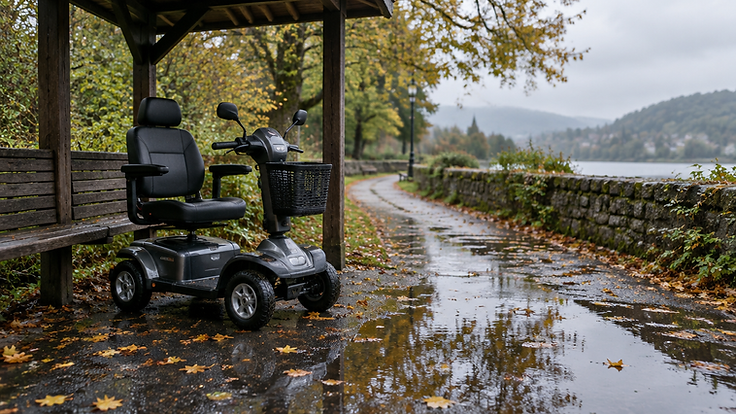
Wet weather does not have to mean staying indoors, but it does change how a scooter behaves. Traction is lower, stopping distances grow and visibility drops — for you and for drivers.
The surfaces that catch people out
- Wet leaves, especially on block paving, paths and cycle routes.
- Painted road markings — give-way lines, crossings and the yellow zig-zags outside schools.
- Metal drain covers and inspection covers, which become genuinely slippery when wet.
- Block paving and smooth stone, particularly in town centres.
- Standing water, which hides potholes and raised kerb edges you would otherwise avoid.
Where you can, steer around these rather than over them. It usually adds a metre to your journey and removes most of the risk.
Before you set out
Check the forecast, but also check the machine: tyre pressures, brake function and a full charge if you are going any distance. Cold weather reduces the range a battery will give you, so plan for less than you would get in summer.
Wear something light-coloured or reflective, and if your scooter has lights, use them even in daylight — Hampshire lanes and residential streets can be gloomy by mid-afternoon in winter. A waterproof cover for the tiller and seat, and a phone in a dry pocket, are worth the small trouble.
While you are out
- Reduce speed before you turn, not during the turn.
- Leave more room in front of you. Braking on a wet surface takes longer.
- Take dropped kerbs and ramps straight on, at a slow, steady speed, rather than at an angle.
- Keep both hands on the tiller, and keep your phone in your pocket.
- In heavy rain, consider whether the trip can wait. No errand is worth a fall.
When you get home
Dry the machine rather than leaving it wet, particularly the battery compartment and the charging point. Charge it in a dry place, not in a damp outbuilding. Check that the brakes still feel normal before your next trip, and if anything feels different, stop using the scooter and get it looked at.
Knowing when not to go
If the rain is heavy, if the light is poor, or if you are tired or unwell, staying in is a perfectly sensible decision. Many of our customers arrange deliveries or ask a family member for the odd errand over winter rather than take risks.
If you would like us to check your tyres, brakes and battery before winter sets in, ring us on 01264 243124 and we will arrange a service.
Still have a question?
Advice over the phone costs nothing. If we do not know the answer, we will tell you — and point you to someone who does.
Related advice
Illustration to be added
Local Information
Mobility and Accessibility Around Andover: A Practical Guide
Surfaces, slopes and dropped kerbs around Andover and Grateley — what to think about before you plan a regular journey.
21 October 2026
Illustration to be added
Maintenance
Storing Your Mobility Scooter Over Winter
Where to store it, how to protect the battery, and the checks to make before you use it again in spring.
16 October 2026

Safety & Practical Advice
Pavement or Road? Where You Can Legally Use a Mobility Scooter
The rules for 4mph and 8mph scooters, where each class may go, and why pedestrians always come first on shared paths.
14 October 2026

No pressure, ever
Not sure what mobility solution is right for you?
Tell us what you are looking for and our team will be happy to discuss the options available — including what we would not recommend for your situation.
We visit customers at home across Hampshire, and there is never any obligation to buy.