
Mobility equipment
Living Aids & Seating
Practical aids for bathing, dressing, reaching and sitting comfortably. Often a small change around the home makes the biggest difference.
What it does
Small changes, real difference
Most of the customers we help are not looking for a big piece of equipment. They want to get out of a low armchair, reach a shelf, step into the bath safely or put their socks on without help — and a well-chosen aid costing very little can solve exactly that.
In the bathroom
Bath boards, shower stools, non-slip mats, grab rails and raised toilet seats are the changes we are asked for most. Rails must be fixed into something solid, so we will talk about what your walls are made of before recommending them.
Getting dressed and reaching
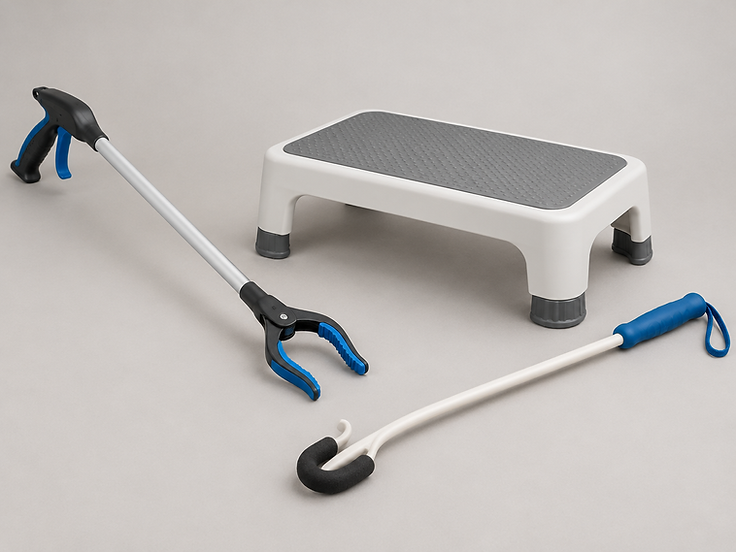
Long-handled reachers, dressing aids and sock and stocking aids make a genuine difference where bending or reaching is painful or risky after surgery.
Sitting and standing
A chair that is too low is one of the most common reasons people struggle at home. A riser recliner or a chair with a higher seat and firm arms can restore independence in the living room, and we will check it fits your room and your doorway before it is delivered.
Who it’s suitable for
People who manage at home but find particular everyday tasks difficult, uncomfortable or worrying — especially in the bathroom, when dressing, or when getting up from a chair. Also families setting up a home for someone coming out of hospital.
Who it’s not suitable for
Most living aids are simple, but some carry a weight limit, and grab rails are only as strong as the wall they are fixed to. We will always tell you if a fitting needs a qualified builder, and we will not sell you a rail that will not hold. Some items, such as bath lifts, need an assessment of your strength and balance — please involve an occupational therapist where mobility is changing significantly.

Talk it through with us
No obligation, and no pressure to buy. We will tell you honestly whether this is the right route for you.
Unit 6, Business Park, Cholderton Road, Grateley, Grateley — we also visit you at home across Hampshire.
Pricing
Living aids are usually the least expensive way to make a real difference at home. Tell us the specific task you are finding hard and we will suggest the smallest sensible solution.
What to look for
- Rails and supports suited to your walls, not just the fitting kit in the box
- Height and width measured against your bathroom or armchair
- Fabric and cushion options that are easy to keep clean
- Whether a chair will fit through your doorway and where the plug needs to reach
- Straightforward instructions, shown to you in person rather than left in a box
How this helps day to day
- Reduce the risk of slips in the bathroom and on the stairs
- Get dressed without needing help every morning
- Stand up from your chair under your own steam
- Make a room work again without moving house
Questions we are often asked
It depends on what the wall is built from. Rails need a solid fixing, and a plasterboard or stud wall may need a different approach. Tell us what your bathroom walls are like, or send us a photograph, and we will tell you honestly whether a standard fixing will hold — we will not sell you a rail that is not safe.
No. Sometimes a chair raiser or a firmer cushion is enough, and sometimes the answer is a chair with a higher seat and solid arms. A riser recliner is very effective but takes up more room and needs a power point nearby. We will look at your room, your doorway and how much space you have before suggesting anything.
Bath lifts and hoists involve your own strength and balance, so they need a proper assessment rather than a guess. An occupational therapist should be involved, particularly if your mobility is changing significantly. If you already have an assessment or recommendation, bring it to us and we will tell you what we can supply.
Often yes — they are usually the least expensive way to make a real difference. A long-handled reacher, a sock aid or a bath board can remove an everyday difficulty that has quietly been making life harder. Tell us the specific task you struggle with and we will suggest the smallest sensible solution.
VAT relief on eligible mobility equipment
Some mobility equipment can be zero-rated for VAT when it is designed or adapted for a person who is chronically sick or disabled, and when the equipment is supplied for that person’s personal use. The rules depend on both the product and your situation, so eligibility is not automatic.
If you think you may qualify, tell us when you get in touch. We will explain what HMRC requires, confirm the price you will actually pay, and ask for a simple written declaration before we supply the equipment. We will only apply the relief where the product and your circumstances meet HMRC’s conditions.
Related advice
Illustration to be added
Local Information
Mobility and Accessibility Around Andover: A Practical Guide
Surfaces, slopes and dropped kerbs around Andover and Grateley — what to think about before you plan a regular journey.
21 October 2026
Illustration to be added
Maintenance
Storing Your Mobility Scooter Over Winter
Where to store it, how to protect the battery, and the checks to make before you use it again in spring.
16 October 2026
Safety & Practical Advice
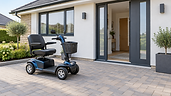
Pavement or Road? Where You Can Legally Use a Mobility Scooter
The rules for 4mph and 8mph scooters, where each class may go, and why pedestrians always come first on shared paths.
14 October 2026

No pressure, ever
Not sure what mobility solution is right for you?
Tell us what you are looking for and our team will be happy to discuss the options available — including what we would not recommend for your situation.
We visit customers at home across Hampshire, and there is never any obligation to buy.