
Mobility equipment
Wheelchairs & Powerchairs
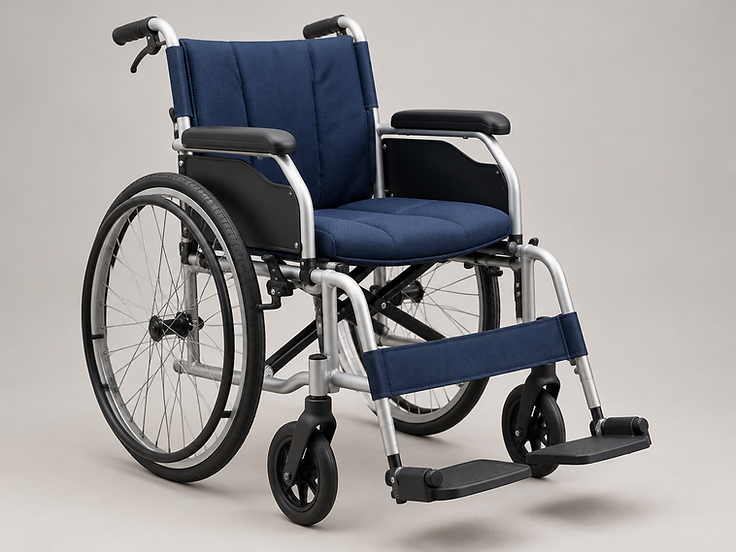
Manual and powered options in a range of sizes, with help choosing between a wheelchair and a powerchair for the way you live.
What it does
Manual or powered
A manual wheelchair puts you in control if you have the strength and shoulder mobility to push yourself, and it is lighter and easier to transport. A powerchair takes the effort out of longer distances and is often the better choice where hills, cambered pavements or fatigue are part of everyday life.
Getting the fit right
Seat width, seat depth and back height matter more than most people expect. A chair that is too wide makes pushing harder and transfers more difficult; one that is too narrow is uncomfortable within an hour. We will measure you rather than guess, and we will talk through pressure-relieving cushions where you sit for long periods.
Transport and storage
If the chair needs to go in a car, the weight of the heaviest part and whether the back folds down become the deciding factors. Boot hoists and ramps can be discussed too — tell us what vehicle you have.
Try before you commit
Where it is practical, we will bring options to your home so you can try them on your own floors and through your own doorways.
Who it’s suitable for
People who need support with walking over any distance, whether indoors, in the garden or out in the community. Powered options suit people who can operate a joystick reliably and who need to cover longer distances; manual options suit people who want a lighter chair they can push themselves or that a companion can push.
Who it’s not suitable for
Powerchairs need charging planning and cannot be used on the road unless they meet the Class 3 requirements for road use. Manual wheelchairs require upper body strength, a willing companion, or both. Neither is a substitute for a professional assessment of your posture or pressure care — an occupational therapist or wheelchair service can advise on clinical needs, and we will happily work alongside them.

Talk it through with us
No obligation, and no pressure to buy. We will tell you honestly whether this is the right route for you.
Unit 6, Business Park, Cholderton Road, Grateley, Grateley — we also visit you at home across Hampshire.
Pricing
Wheelchair and powerchair prices depend on size, weight and power. Tell us what you need it to do and we will price the realistic options for you.
What to look for
- Seat width, depth and back height measured to fit you
- Whether the chair folds or dismantles for car transport
- Weight of the heaviest part, if someone will be lifting it
- Cushioning and pressure relief for people who sit for long periods
- Footrest and armrest adjustment, including flip-back armrests
- Battery range and charging routine on powered models
How this helps day to day
- Move around your own home without waiting for help
- Get out to appointments, shops and family visits more easily
- Reduce the strain on your shoulders and arms if pushing yourself
- Keep your feet and legs properly supported, which reduces discomfort over time
Questions we are often asked
It usually comes down to two things: how far you need to go, and whether you can push yourself comfortably. A manual chair is lighter, easier to transport and puts you in control if you have the strength in your arms and shoulders. A powerchair takes the effort out of longer distances and uneven ground. We will talk both through with you honestly, including the weight of each option if it needs to go in a car.
We measure you. Seat width, seat depth and back height matter more than most people expect, and a chair that is the wrong width is uncomfortable within an hour or makes self-propelling much harder. Bring the shoes you normally wear when you come to be measured.
Many can, but it depends on the model. The deciding factors are the weight of the heaviest part, whether the back folds down and whether the wheels are removable. If you tell us what vehicle you have, we will tell you which options are realistic — and mention boot hoists and ramps where they would help.
Some people can, depending on their needs and where they live. Wheelchair services assess clinical requirements, so it is worth asking your GP or an occupational therapist. If a wheelchair service is already involved, we are happy to work alongside it — we will not try to sell you something the service is providing.
VAT relief on eligible mobility equipment
Some mobility equipment can be zero-rated for VAT when it is designed or adapted for a person who is chronically sick or disabled, and when the equipment is supplied for that person’s personal use. The rules depend on both the product and your situation, so eligibility is not automatic.
If you think you may qualify, tell us when you get in touch. We will explain what HMRC requires, confirm the price you will actually pay, and ask for a simple written declaration before we supply the equipment. We will only apply the relief where the product and your circumstances meet HMRC’s conditions.
Related advice
Illustration to be added
Local Information
Mobility and Accessibility Around Andover: A Practical Guide
Surfaces, slopes and dropped kerbs around Andover and Grateley — what to think about before you plan a regular journey.
21 October 2026
Illustration to be added
Maintenance
Storing Your Mobility Scooter Over Winter
Where to store it, how to protect the battery, and the checks to make before you use it again in spring.
16 October 2026
Safety & Practical Advice
Pavement or Road? Where You Can Legally Use a Mobility Scooter
The rules for 4mph and 8mph scooters, where each class may go, and why pedestrians always come first on shared paths.
14 October 2026

No pressure, ever
Not sure what mobility solution is right for you?
Tell us what you are looking for and our team will be happy to discuss the options available — including what we would not recommend for your situation.
We visit customers at home across Hampshire, and there is never any obligation to buy.